
How to plan a Tanzania safari itinerary for 10 days 2026 – 2028
Ten days is a good length for a Tanzania safari: a Tanzania safari itinerary for 10 days can include Tarangire, the Serengeti, Ngorongoro Crater, and Lake Manyara. The key is to follow one circuit at a considered pace rather than spend precious days crossing the country. That leaves room for early game drives, unhurried time in camp, and the changing character of each landscape.
It’s natural to wonder whether ten days will feel like enough, and whether a memorable safari must mean a luxury budget. The answer depends on how you shape the journey: accommodation, transport, season, and the balance between shared and private arrangements all influence the experience and its cost.
This guide will help you map a practical route, choose accommodation, understand what influences budget, mid-range, and luxury costs, and compare a package with independent planning. You’ll see how to decide where to linger and where a smooth connection matters more than adding another stop.
Key Takeaways
- Build your route around one safari circuit, leaving enough time for game drives instead of adding stops that make the journey feel rushed.
- Plan your Ngorongoro Crater visit around wildlife viewing and the time needed to travel between parks.
- Choose accommodation by balancing comfort, location, and how much of your budget you want to reserve for transport and activities.
- Compare package and independent travel by weighing convenience and coordinated logistics against the flexibility to arrange each part yourself.
- Treat Zanzibar, Pemba, or Mafia as a considered extension, and account for the extra travel connections when shaping your itinerary.
Table of Contents
- Day 3 – Ngorongoro Crater National Park – The most beautiful park?
- Are Tanzania safari and Zanzibar packages worth booking, or should I DIY?
- What Does This 7-10 Day Tanzania Safari Itinerary Look Like?
- Safari accommodation options
- Budget, mid-range and luxury safari costs
- View Travel Wild: The Wild & Cultural Journey – 10 Days
Day 3 – Ngorongoro Crater National Park – The most beautiful park?
Plan the crater visit as a deliberate wildlife day, not simply a transfer between parks. On a Tanzania safari itinerary for 10 days, Ngorongoro adds a distinct landscape between Tarangire and the Serengeti.
1. Travel from Tarangire to Ngorongoro Crater
Allow approximately 4 hours for the drive from Tarangire toward Ngorongoro, excluding game drives. Treat this as a travel leg, rather than assuming the journey itself leaves ample time for a full crater excursion. Before setting out, align your departure and overnight stop with the descent and return drive. Avoid squeezing a crater visit into the transfer if it leaves little time to observe wildlife.
2. Explore the Ngorongoro Conservation Area
Plan your crater excursion within the wider Ngorongoro Conservation Area, where wildlife habitat and Maasai pastoral life share the landscape. More than 40,000 Maasai pastoralists live in the area with their livestock. The crater formed two million years ago after a vast volcano erupted; its floor covers around 260 km², ringed by walls that drop 600 metres. Build time for the descent, a gradual circuit across the floor, and the climb back out.
3. Choose an early-morning crater game drive
Begin the crater visit early, when the open floor and changing light shape a quieter viewing experience. The crater is thought to hold more than 25,000 large mammals, but sightings still depend on animal movement and where the drive takes you. Scan the grassland for grazing herds, then watch wetland edges and woodland for different activity. Ngorongoro is the only place in Tanzania where visitors can see both black and white rhinos, so make time to search carefully rather than rushing between sightings.
Keep the vehicle moving at a considered pace, and let your guide respond to what appears. A lion resting near the track, a rhino in the distance, or a herd crossing the crater floor each calls for patience. The crater’s roughly 100-square-mile area offers a compact setting for varied wildlife viewing, not a guarantee of any particular encounter.
4. Place Ngorongoro within the northern circuit
Use the crater as one part of a route linking Tarangire, Ngorongoro, the Serengeti, and possibly Lake Manyara. Each stop offers a distinct landscape, so avoid treating the parks as interchangeable checklist items. Tarangire provides a contrasting start before the high-walled crater; the Serengeti extends the journey across broad plains, while Manyara adds another setting. Allow enough time around Ngorongoro for the four-hour transfer, the descent, wildlife viewing, and onward travel. This makes the crater excursion the centrepiece of a day, rather than a brief pause between destinations.
Are Tanzania safari and Zanzibar packages worth booking, or should I DIY?
A package is useful when coordinating safari drives, flights, and a Zanzibar stay would distract from the journey. DIY planning offers more control, but you’ll need to align each transfer, lodge, and park visit yourself.
For a 10-day trip, pack light, breathable clothing, a warm layer for cool mornings, comfortable walking shoes, sun protection, and binoculars. If your route includes small charter flights, use a soft-sided bag and stay within the 15kg luggage limit.
- Map flights before choosing your route. Small-plane journeys connect Arusha, safari areas, and Zanzibar, reducing long road transfers but adding another timetable to coordinate. A flight from Arusha to Zanzibar takes around 90 minutes. For Serengeti connections, plan around your camp’s airstrip and the ground transfer between the strip and accommodation. Keep the sequence clear: safari first, then Zanzibar, so a beach stay doesn’t interrupt your wildlife days.
- Choose a package if you value coordinated logistics across several destinations. A package can bring accommodation, transfers, and activities into one plan, which is useful when combining the Serengeti with Zanzibar. Arranging the trip independently gives you more freedom to select each stay and connection, but requires you to manage every handover. One estimate places a package roughly 10-20% above independent arrangements, so weigh that difference against the time and coordination you prefer to take on.
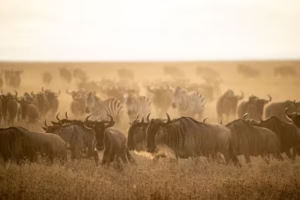
- Match Serengeti game drives to the experience you want. Central Serengeti suits a route focused on the park’s broad wildlife viewing; northern or western areas may make more sense when your itinerary and migration plans point there. The Great Migration is an annual movement of around two million wildebeest and hundreds of thousands of zebras across Tanzania and Kenya. Wildlife moves across a vast landscape, so don’t plan around a guaranteed sighting at one location.
- Use each morning in the Serengeti deliberately. Ask your guide to shape the drive around recent animal movement, habitat, and the time available before your next transfer. The park’s scale means central, northern, and western areas aren’t interchangeable stops on a quick loop. If a guided Tanzania wildlife trip fits your plans better than arranging each detail yourself, consider the Tanzania Private Wildlife Safari, a focused 3-day private safari visiting Tanzanian wildlife reserves.
What Does This 7-10 Day Tanzania Safari Itinerary Look Like?
For a 10-day northern Tanzania safari, link Tarangire, Ngorongoro, and the Serengeti by road, then fly to Zanzibar if you want a beach stay. Visa requirements depend on your nationality, vaccination needs on your route and health circumstances, and travel insurance should account for medical care, evacuation, and trip interruption.
1. Choose a Northern Tanzania Route and Transport
Start in Arusha, then shape the safari route through Tarangire, Ngorongoro, and the Serengeti, adding Lake Manyara when it fits your pace. The northern circuit is the more practical choice for a shorter trip, while the southern circuit calls for more time. Use a road vehicle to connect parks, and avoid crossing between northern and southern circuits on this short schedule.
2. Plan the Safari and Zanzibar Combination
Set aside safari days first, then place Zanzibar at the end so beach travel doesn’t break up game viewing. A 7-day safari with a 3-day Zanzibar extension is one possible structure, although transfers shape how much time remains for each destination. A small-plane journey from Arusha to Zanzibar takes around 90 minutes; flying from the Serengeti also requires coordinating the camp, airstrip, and onward connection.
- Decide whether Zanzibar, Pemba, or Mafia suits your final days. Zanzibar offers Stone Town alongside beaches, creating a change of pace after the northern parks. Pemba and Mafia are alternative island destinations, but each adds another travel decision to a compact itinerary. Keep the plan simple: choose one island, allow time to reach your accommodation, and avoid stacking several connections into the final day.
For a 10-day safari and beach journey, protect the safari portion from being shortened by transfer logistics. The Great Migration moves across Tanzania and Kenya, while wildebeest and other animals shift through different habitats. A northern Serengeti stay may suit one seasonal plan; central Serengeti drives may suit another. Let the wildlife priorities determine the park sequence before adding a coastal destination.
- Arrange entry and health preparations alongside your route. Check Tanzania visa requirements for your passport nationality and travel purpose, then prepare the relevant application before departure. Vaccination advice depends on your health history, previous vaccinations, and travel route, so arrange a travel-health consultation early enough to act on its recommendations. Choose travel insurance that addresses medical treatment, emergency evacuation, and trip interruption, and read the exclusions carefully.
Before confirming the itinerary, match flight times with lodge transfers and your final departure. The Arusha to Zanzibar flight takes around 90 minutes, while the ferry from Dar es Salaam to Zanzibar takes 1.5 hours. They serve different starting points, so don’t treat them as interchangeable connections. Keep your last safari transfer and island arrival on separate, well-planned legs to preserve time for both wildlife and Stone Town.
Safari accommodation options
Tanzania’s national park and Ngorongoro Conservation Area fees are separate from accommodation costs. The total depends on which parks your route enters and how the Ngorongoro visit is arranged, so list those charges separately when comparing itineraries.
- Set your accommodation budget before choosing lodges. These ranges help frame the choice, but don’t describe every camp or lodge. Room type, location, season, and what’s included all shape the final cost.
- Choose between a lodge, a tented camp, and simpler accommodation by considering the landscape and your daily route. A tented stay can place you closer to the rhythms of the bush, while a lodge may suit travellers who value a more settled base. For a 10-day trip, location matters as much as comfort: an overnight stop near your next park can reduce backtracking and preserve time for game drives.
- Match each overnight stay to the route rather than booking one style everywhere. One itinerary allocates 1 night at Arusha Coffee Lodge, 2 nights at Oliver’s Camp in Tarangire, and 3 nights at The Highlands in the Ngorongoro Conservation Area. Those examples show how accommodation can follow the journey from arrival through the parks. A camp near Tarangire, for instance, supports a different day than a base near Ngorongoro.
- Compare what each accommodation rate covers before deciding. Meals, transfers, and activities affect the overall budget, so compare like with like rather than looking only at the room rate. Keep national park and conservation-area charges separate from lodging in your plan. A route through Tarangire, Serengeti, and Ngorongoro involves different stops from a shorter stay centred on one park.
- Choose a final night that makes departure straightforward. If your flight leaves from Kilimanjaro International Airport, consider how the last safari transfer connects with your departure plans. An overnight in Arusha can create a calmer transition than travelling directly from a remote camp. For example, the itinerary’s 1 night at Arusha Coffee Lodge places an arrival or departure stay within the wider route, rather than adding another wildlife stop.
Budget, mid-range and luxury safari costs
For a 10-day safari, the largest cost choices are accommodation, transport, season, and how the trip is organized. Compare those elements before deciding whether budget, mid-range, or luxury best fits your priorities.
- Set your comfort priorities before requesting a quote. Budget planning usually means prioritizing essential logistics and simpler stays; mid-range planning balances comfort and location; luxury planning gives greater weight to camp style and setting. A tented camp on the Serengeti plains offers a different atmosphere from a lodge near Arusha. Decide which details matter most instead of treating a category label as a complete description of the trip.
- Compare travel dates with Tanzania’s seasonal pricing. The low-season period listed for this safari runs from April 1st through May 19th; mid-season covers the rest of the year. High season includes July, August, September, and December 20 through January 10. A holiday supplement applies to travel from December 20 to January 5. Ask how your chosen dates affect the overall itinerary, not only the accommodation rate.
- Check what the safari arrangement includes. A useful comparison separates accommodation, meals, park and conservation-area fees, transfers, and game drives. For example, a quote that includes a Serengeti game drive and transport cannot be compared directly with a room-only rate. Also check whether the route uses road transfers or internal flights, since this affects how the journey is organized and what contributes to the total cost.
- Consider group size and privacy alongside comfort. Shared travel spreads some costs across travellers, while a private vehicle lets you shape the experience around your own pace and wildlife interests. A leopard sighting on the plains may hold your attention longer; a shared schedule has different needs. Safari price depends on route, season, accommodation, transport, and group size, and is provided after a quote request.
- Choose the trade-offs you’ll appreciate throughout all 10 days. A lower-cost plan may prioritize practical accommodation and a focused route; a luxury plan may place more emphasis on camp setting and comfort. Neither category guarantees more wildlife. If a private journey suits your priorities, explore a private Tanzania safari and consider how its route and pace fit your plans.
View Travel Wild: The Wild & Cultural Journey – 10 Days
The Wild & Cultural Journey – 10 Days from View Travel Wild brings classic Tanzanian game drives together with local cultural experiences. It suits travellers who want a guided route shaped around wildlife and meaningful encounters, rather than coordinating every transfer and stay independently. The itinerary offers a considered way to explore Tanzania’s landscapes while leaving the details of the journey in experienced local hands.
If you’re weighing a longer journey against a focused wildlife visit, View Travel Wild also offers the Tanzania Private Wildlife Safari – 3 Days. The right fit depends on how much time you have and whether cultural experiences are central to your plans. For a closer look at the ten-day journey, visit View Travel Wild.
Shape a Journey That Feels Like Yours
Before settling on dates or accommodation, decide what you want the journey to make room for. Perhaps it’s an unhurried morning in the bush, a cultural encounter that gives the landscape deeper meaning, or quiet days by the coast. Let that priority guide your choices, so each stop feels intentional rather than simply added to the route.
As you shape a Tanzania safari itinerary for 10 days, think about the pace you’ll enjoy as much as the places you hope to see. A well-considered plan leaves room for wildlife to set its own rhythm, while making practical connections part of the design. View Travel Wild can help you explore a guided wildlife and cultural journey in Tanzania, with an approach rooted in local experiences.
Contact View Travel Wild to discuss the journey you have in mind. Your next step can be a thoughtful one, and the planning can begin with what matters most to you.
Frequently Asked Questions
Is 10 days a good length of time for a safari in Tanzania?
Yes, ten days gives you time to experience several northern parks without making every day a transfer day. A Tanzania safari itinerary for 10 days can include arrival and departure logistics alongside wildlife viewing, with room to adjust the pace. It works particularly well if you focus on one circuit. Add Zanzibar only if you’re comfortable giving some of those days to island travel and rest.
How much will this safari cost?
The cost depends on your route, travel season, accommodation, transport, and whether you choose shared or private travel. Compare complete itineraries rather than a single daily rate: meals, park access, transfers, and activities can change what a quote covers. For a safari arranged through View Travel Wild, the price depends on the trip details and is given after a quote request, with those factors shaping the total.
How do I Start Planning a Safari In Tanzania?
Start by choosing your travel dates and deciding what matters most: wildlife time, cultural visits, or a beach extension. Next, select one circuit and match the route to your available days, then choose accommodation and transport suited to the pace. Keep international flights separate when comparing package details, and coordinate arrival and departure plans with the first and last safari days.
What kind of accommodations can I expect?
Expect options ranging from simple stays to lodges and tented camps, with comfort and setting varying across the route. A camp near wildlife areas can make early starts more practical, while a lodge may suit travellers seeking a more settled base. Check whether meals, transfers, and park excursions are included. These details help you understand the experience, not just the room category.
What is the best 10-day Tanzania safari itinerary?
A strong plan gives the northern parks enough time and avoids adding distant regions just to increase the number of stops. You might begin with a night near your arrival point, continue through Tarangire and Ngorongoro, then spend longer in the Serengeti. Keep the final day aligned with your departure connection. If beaches matter more than an extra park, reserve time for Zanzibar instead.
Which national parks should a 10-day Tanzania safari include?
For a classic northern route, consider Tarangire National Park, Serengeti National Park, Ngorongoro Crater, and Lake Manyara National Park. You don’t need to visit every park; choose according to the wildlife and landscapes you most want to experience. The Serengeti suits broad plains and migration-focused travel, while Ngorongoro offers a distinct crater setting. Tarangire and Manyara add different habitats to the route.
How many days should you spend in Serengeti, Ngorongoro, Tarangire, and Lake Manyara?
For a balanced nine-night example, use two nights in Tarangire, three around Ngorongoro, and three in the Serengeti, with an arrival night near your starting point. Lake Manyara can be a park visit rather than another overnight stop. Adjust this outline to your priorities: more Serengeti time allows slower game viewing, while a tighter route leaves less room to rest between drives.
How much does a 10-day Tanzania safari cost in 2026?
There isn’t one useful total for every traveller because season, group size, accommodation, route, and included services all affect the budget. A shared trip with simpler stays differs from a private journey using luxury camps, even across the same parks. Compare what each itinerary includes, especially transport, meals, park access, and activities. For a View Travel Wild trip, the price depends on your travel details and is provided after a quote request.